Basal Cell Carcinoma Treatment with Electrochemotherapy: Insights from the InspECT Registry (2008–2019)

Basal cell carcinoma (BCC) is the most common form of skin cancer, affecting approximately 2 to 3 million people worldwide each year. This cancer originates from the basal cells in the outer layer of the skin (epidermis) and is often triggered by prolonged exposure to ultraviolet radiation from the sun. Although BCC rarely spreads to other parts of the body, it can cause significant damage to surrounding tissues. If left untreated, it may lead to cosmetic and functional problems, particularly in sensitive areas like the face.
The standard treatment for BCC is surgical removal with clear margins, which offers a high cure rate. However, surgery is not an option for everyone. Elderly patients, those with additional health conditions, or individuals with tumors in delicate areas such as the eyelids, nose, or ears may not tolerate surgery well or may not achieve desirable cosmetic results. In these cases, alternative treatments are employed, including topical therapies (such as imiquimod or 5-fluorouracil), photodynamic therapy, radiation therapy, or hedgehog pathway inhibitors for advanced cases. These alternatives, however, come with drawbacks like reduced effectiveness, side effects, or high costs.
Electrochemotherapy (ECT) has emerged as a modern and effective treatment for BCC. This approach combines the injection of a chemotherapy drug (typically bleomycin) with the application of short, intense electrical pulses to the tumor. These pulses temporarily increase the permeability of cancer cell membranes, allowing more of the drug to enter the cells and greatly enhancing its ability to destroy them. ECT is especially valuable for patients unable to undergo surgery or those seeking to preserve the appearance and function of sensitive areas, as it causes minimal harm to surrounding healthy tissues.
.
Main Study: InspECT Registry (2008–2019)
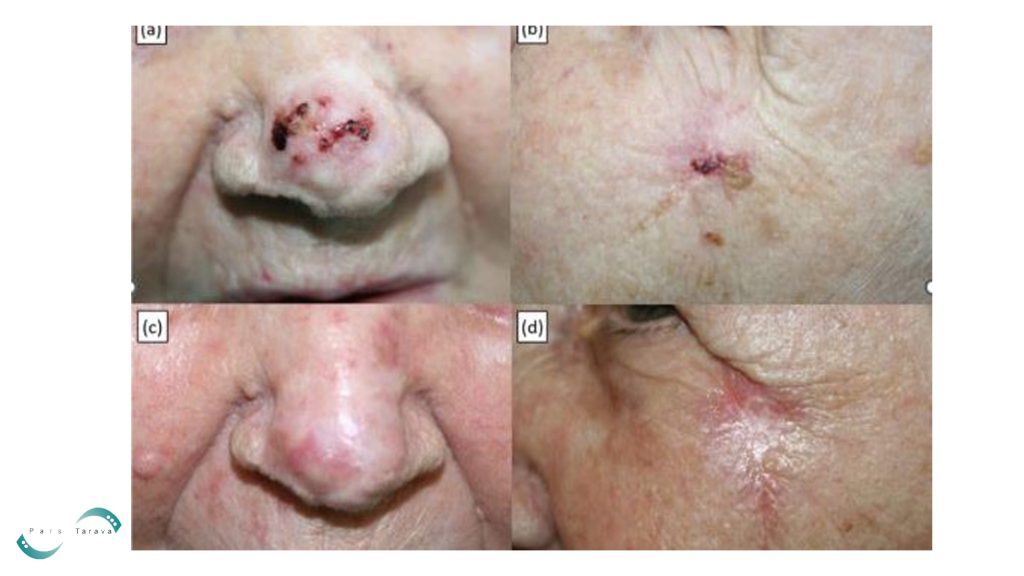
A forward-looking study published in 2022 in Current Oncology analyzed data from the International Network for Sharing Practices of Electrochemotherapy (InspECT) registry. The study involved 330 patients from seven countries who received ECT treatment between 2008 and 2019, with a total of 623 BCC tumors (an average of 1 tumor per patient, ranging from 1 to 7, with a median size of 13 mm and a range of 5 to 350 mm). About 85% of the tumors were primary, and 80% were located in the head and neck region.
.
Methodology
This section outlines how the study was carried out. It covers the study design, participant selection, treatment methods, and how results were assessed. The aim is to provide clear details about the research process so readers can evaluate its reliability and potential for replication. The study drew on data from the InspECT registry, an international database tracking electrochemotherapy outcomes in skin cancer patients. It included 330 BCC patients treated with ECT between 2008 and 2019. Additional details on inclusion and exclusion criteria, the ECT procedure, anesthesia, outcome evaluation, and statistical analysis are provided below:
- Inclusion Criteria: Patients with histologically confirmed BCC for whom standard treatments were unsuitable or ineffective, and who had normal lung and kidney function.
- Exclusion Criteria: Allergy to bleomycin, a cumulative bleomycin dose exceeding 400,000 IU/m², pregnancy, or breastfeeding.
- ECT Procedure: Following ESOPE guidelines (2006, updated 2018), bleomycin was given either intravenously (15,000 IU/m², up to a maximum of 30,000 IU) or directly into the tumor (1000 IU/ml). Electrical pulses were delivered using the Cliniporator™ device (8 pulses, 100 microseconds, 1000 V/cm for needle electrodes or 1300 V/cm for plate electrodes).
- Anesthesia: 68% of patients received local anesthesia, while 32% had local anesthesia with mild sedation.
- Outcome Assessment: Treatment response was measured using RECIST v1.1 criteria, with complete response (CR) defined as the total disappearance of the tumor. Side effects were graded using NCI CTCAE v3.0 standards.
- Statistical Analysis: Performed with NCSS 9 software, with a p-value less than 0.05 considered statistically significant.
.
Key Findings
| Aspect | Details |
|---|---|
| Effectiveness | Out of 300 evaluable patients, 242 (81%) achieved complete response (CR) after one ECT session. Tumor clearance rate was 83%. |
| Safety | Side effects included skin ulceration (16%, 1% grade 3) and skin darkening (8.1%, 2.5% grade 3). Most patients reported mild or no pain. |
| Predictive Factors | No prior treatment (OR 0.35, p=0.001) and full coverage of deep tumor margins (OR 5.55, p=0.016) predicted complete response. Previous radiation had a negative impact (OR 0.25, p=0.0051). |
| Local Control | At a 17-month follow-up, 9.3% of patients had local recurrence or progression. Local progression-free survival was 96% at 1 year and 90% at 2 years. |
.
Treatment Recommendations
Electrochemotherapy (ECT) is recommended as an effective option for BCC in specific situations, particularly for patients who cannot have surgery or who want to maintain the appearance and function of sensitive areas. Based on the InspECT study and other research, the following guidance is offered:
- Treating Low-Risk BCC in Specific Patients: ECT is a safe and effective choice for patients with multiple BCCs (e.g., those with Gorlin-Goltz syndrome) or those unable to undergo surgery due to advanced age, coexisting conditions (like diabetes or heart disease), or other constraints. Its minimal damage to healthy tissues makes it a viable alternative to surgery.
- Preserving Appearance and Function in Sensitive Areas: ECT is particularly advised for small or high-risk BCCs in areas like the eyelids, nose, or ears, where surgery might cause cosmetic issues (e.g., facial disfigurement) or functional problems (e.g., impaired vision or hearing). With its limited impact on surrounding tissues, ECT offers effective treatment while supporting preservation of both form and function. Studies report complete response rates of 75–100% in the head and neck area.
- Supportive Treatment for Advanced BCC: For locally advanced BCC unresponsive to other therapies, ECT can serve as a complementary option alongside systemic treatments (e.g., chemotherapy or hedgehog pathway inhibitors). It can help shrink tumors or manage local recurrence, especially in patients needing breaks from systemic therapy due to side effects.
While ECT has a higher recurrence rate (around 10% at 2 years) compared to surgery (e.g., Mohs surgery with a 1–3% recurrence rate at 5 years), it remains a safe and reasonable choice for those unsuitable for surgery. For instance, a 2019 randomized trial found ECT had an 87.5% recurrence-free rate at 5 years, compared to 97.5% for surgery, showing it is still quite effective.
.
Review of Other Sources
A systematic review published in 2021 in the Journal of the European Academy of Dermatology and Venereology examined 32 studies on ECT with bleomycin for BCC. It included one randomized controlled trial, 15 uncontrolled studies, three registry studies, six prospective case series, and seven retrospective case series. Key points include:
- A 92% complete response rate after two months, rising to 100% with retreatment.
- A low recurrence risk.
- Bleomycin was administered intravenously (14 studies), intratumorally (9 studies), or both (9 studies).
- The review called for larger randomized trials and cost-effectiveness studies.
Another 2017 study with 84 patients with advanced or multiple BCCs found that one or two ECT sessions could achieve high complete response rates, particularly in those unfit for standard treatments.
.
The Role of Pars Tarava

Pars Tarava, the first manufacturer of electroporation and electrochemotherapy devices in Iran, plays a vital role in making this advanced technology available to Iranian patients. Their devices meet international standards and deliver precise electrical pulses for effective BCC treatment. These tools enable ECT to be performed with minimal side effects, improving patient outcomes.
By lowering costs and boosting access to ECT, Pars Tarava offers Iranian patients unable to undergo surgery a chance at safe and effective treatment. This innovation reflects their dedication to advancing healthcare in Iran. For free consultation and product details, contact:
Contact: 00989024051862
.
Future Outlook
Research is exploring various ways to enhance electrochemotherapy (ECT) to make it more effective, safer, and more comfortable for patients. These improvements could broaden ECT’s role in BCC treatment and make it a more common clinical option. Key areas of future research include:
- Reducing Bleomycin Dose: Bleomycin, the main drug in ECT, can cause serious side effects like lung damage. Studies are investigating lower doses to reduce risks while keeping treatment effective. A 2018 study, for example, showed that a reduced bleomycin dose still achieved a 94% complete response rate for BCC.
- Calcium Electroporation as an Alternative: This emerging technique uses calcium ions instead of chemotherapy drugs, potentially lowering toxicity while still killing cancer cells. Early results are promising, offering a safer choice for patients with health limitations.
- Combining with Immunotherapy: Pairing ECT with immune therapies, like PD-1 inhibitors, could boost the body’s immune response against cancer. This is especially promising for advanced or recurring BCC, potentially improving outcomes and reducing recurrence. A 2021 study highlighted its potential for head and neck cancers, including BCC.
- Focusing on Quality of Life and Cosmetic Outcomes: Since BCC often appears on visible areas like the face, preserving appearance and quality of life is crucial. Research is assessing ECT’s impact on cosmetic results and patient satisfaction, such as reduced scarring or better skin appearance post-treatment.
- Standardizing Methods and Training: ECT’s success partly depends on the physician’s skill in placing electrodes and performing the procedure. Standardizing techniques and offering thorough training could ensure more consistent results and increase effectiveness.
- Cost-Effectiveness Analyses: To encourage wider use, studies are needed to show ECT’s economic comparability to treatments like surgery or radiation. These could help health policymakers integrate ECT into standard protocols.
- Technological Advances: Developing better electrodes and guided systems (e.g., imaging for precise tumor targeting) could enhance ECT’s accuracy and effectiveness, shortening treatment times and optimizing results.
These developments, along with more data from larger registries and randomized trials, could strengthen the evidence for ECT’s effectiveness. Ultimately, this could position ECT as a standard BCC treatment, especially for patients with surgical constraints.
.
Conclusion
Electrochemotherapy offers a safe and effective way to treat basal cell carcinoma, particularly for those unable to have surgery. The InspECT study showed an 81% complete response rate with typically mild side effects. Pars Tarava’s production of ECT devices has made this treatment accessible in Iran, enhancing patient outcomes. With ongoing research, ECT could take on a larger role in BCC management and improve patients’ quality of life.
.
Sources:
Rotunno, R., et al. (2016). Electrochemotherapy in Non-Melanoma Head and Neck Skin Cancers: A Three-Center Experience and Review of the Literature. G. Ital. Dermatol. Venereol., ۱۵۱, ۶۱۰–۶۱۸.
Matthiessen, L. W., et al. (2011). Electrochemotherapy in the treatment of skin metastases from breast cancer: a multicenter cohort study. Acta Oncol., ۵۰(۶), ۱۰۲۸–۱۰۳۵.
.