Treatment of Bone Tumors with Electrochemotherapy: Report of a Successful Treatment Case
Malignant bone tumors (including bone metastases from breast, prostate, lung cancers, and others) can cause severe pain, reduced mobility, and decreased quality of life for the patient. Common treatments include surgical tumor removal, radiation therapy, and systemic chemotherapy, each with its limitations. In cases where the tumor is located in hard-to-reach areas such as the sacral bone (sacrum) or patients cannot tolerate surgery, minimally invasive alternative methods take priority. Electrochemotherapy (ECT) is one of these novel methods that has been employed in recent decades and has shown promising results. Electrochemotherapy, with the help of high-voltage electrical pulses, increases the penetration of chemotherapy drugs into tumor cells; for this reason, its effectiveness rate has been reported at 70-90% compared to conventional chemotherapy. In this article, we review the experience of treating bone tumors with the Pars Tarava electrochemotherapy device.
.
Bone Tumors and Treatment Challenges
Bone tumors are divided into two categories: primary (such as osteosarcoma, chondrosarcoma, chondromasarkoma) and secondary/metastatic (usually spread to the bone from other cancers). Both types can cause bone weakening and severe pain. For example, metastatic tumors in the pelvic and sacral bones, due to nerve involvement and pressure on the lower limbs, create serious mobility problems. Standard treatment for these tumors often involves open surgery or fracture risk reduction with fixation. If surgery is not possible, radiation therapy for pain relief (50-80% success) or systemic chemotherapy is recommended. However, these treatments are sometimes ineffective or have many side effects. For this reason, alternative methods, such as targeted, local, minimally invasive therapy, are proposed. One of these methods is electrochemotherapy, which can improve local tumor control with minimal destruction of surrounding healthy tissue.
.
What is Electroporation and Electrochemotherapy?

Reversible electroporation refers to a process in which short, high-voltage electrical pulses temporarily make the membrane of the target tissue cells “porous.” These tiny pores allow drug molecules or DNA to pass through the membrane. Electrochemotherapy combines electroporation with a chemotherapy drug. Typically, the chemotherapy drug (usually bleomycin or cisplatin) is first administered by intravenous injection. After a while, when the drug has circulated in the blood and the tumor, special ECT electrodes are placed at the tumor site or around it. Then, short high-voltage electrical pulses (usually thousands of volts) are applied through these electrodes. These pulses rapidly make tumor cell membranes permeable, allowing more of the anticancer drug to enter the cells.
The result of this combination is an antitumor effect that is several times more effective than the drug alone, without necessarily increasing the total drug dose. After treatment, the tumor gradually responds (with volume reduction or cellular destruction), and the surrounding healthy tissue is largely preserved. This method is considered minimally invasive and usually involves short-term pain and a period of rest after the procedure.
.
Advantages of Electrochemotherapy in Deep Bone Tumors
The advantages of treating bone tumors with electrochemotherapy are as follows:
- High local effectiveness: Electrochemotherapy, by increasing drug penetration into tumor cells, creates a significant therapeutic response. Extensive clinical studies have shown that in about half of patients with bone metastases, tumor size reduction or local disease control is observed after ECT.
- Pain reduction and improved quality of life: An extensive multicenter study on 102 patients showed that after ECT, pain intensity (VAS score) significantly decreases, and patients’ quality of life improves. Another systematic review also showed that patients’ average pain score decreased from 6.9 to 2.7.
- Minimally invasive: Unlike open surgery, ECT is performed without surgical incisions (usually through small incisions for electrode placement) and has a short recovery time. Therefore, the patient’s recovery period is faster, and few side effects, such as mild pain at the electrode insertion site, have been reported.
- Lower chemotherapy dose: In this method, the bleomycin dose is usually much lower than in conventional chemotherapy, as optimal drug delivery is ensured. This means reduced systemic side effects of the drugs.
- Repeatability: If necessary, electrochemotherapy sessions can be repeated. In cases of bone metastases, some patients receive multiple ECT sessions.
- Compatibility with other treatments: Electrochemotherapy is typically prescribed as an adjunct to radiotherapy or surgery. Studies have shown that combining ECT with bone stabilization yields better tumor control.
.
General Treatment Process with Electrochemotherapy
The usual stages of electrochemotherapy for deep tumors include:
- Initial evaluation: Performing imaging (MRI/CT) to determine the exact size and location of the tumor.
- Chemotherapy drug injection: Bleomycin is often injected intravenously at a low dose. This drug accumulates in the tumor tissue.
- Electrode placement: The surgeon or radiologist, under image guidance (fluoroscopy or CT), places specialized ECT electrodes in or around the tumor. For bone tumors, needle or long electrodes are usually used so that the pulses reach the tumor.
- Application of electrical pulses: After electrode placement, the electrochemotherapy device sends short, high-power pulses between the electrodes. These pulses occur at millisecond timescales and facilitate the temporary passage of ions across tumor cell membranes. The patient may feel mild muscle spasms or a sensation of electrical pulsing at this moment; therefore, they are placed under mild anesthesia or sedation.
- Post-procedure monitoring: After the pulses are completed, the patient is monitored and usually can be discharged without prolonged hospitalization. Follow-up imaging in the weeks or months after shows the tumor response status.
.
This method requires specific equipment; Pars Bioelectromagnetism Company (Pars Tarava) is the first Iranian manufacturer of electroporation and electrochemotherapy devices, which, based on the knowledge of domestic researchers, produces and offers standard ECT devices. The company’s devices allow precise cellular destruction with minimal damage to surrounding healthy tissue.
.
Case Description: Treatment of a Patient with Bone Tumor Using Electrochemotherapy
A 48-year-old female patient presented with a large tumor involving the sacrum and pelvis. It was determined that the tumor measured 8×10 cm, and due to its large size and proximity to neural structures, surgical removal was not possible. Initial symptoms included severe pelvic pain and the inability to walk and sit. After consultation with the orthopedic-oncology team, the decision was made to perform electrochemotherapy, and two treatment sessions were scheduled with appropriate intervals.
- First electrochemotherapy session: First, a standard dose of bleomycin was injected into the patient, and after a few minutes, special electrodes were placed in the affected pelvic area. Electrical pulses were applied. MRI imaging three months after treatment showed a decrease in tumor volume of about 60%. Following this significant reduction, the patient was able to move without severe pain, sit, and walk with marked improvement. (Before this session, the patient was almost bedridden.)
- Second electrochemotherapy session: After a few months, and with the tumor volume increasing again, the second session was also performed. In this stage, the tumor volume reduction was less than in the first session (about 20-30%), but the patient’s symptoms improved again. The patient reported reduced pain and increased comfort in sitting. Even with a partial response, the patient was satisfied because she had gained better mobility.
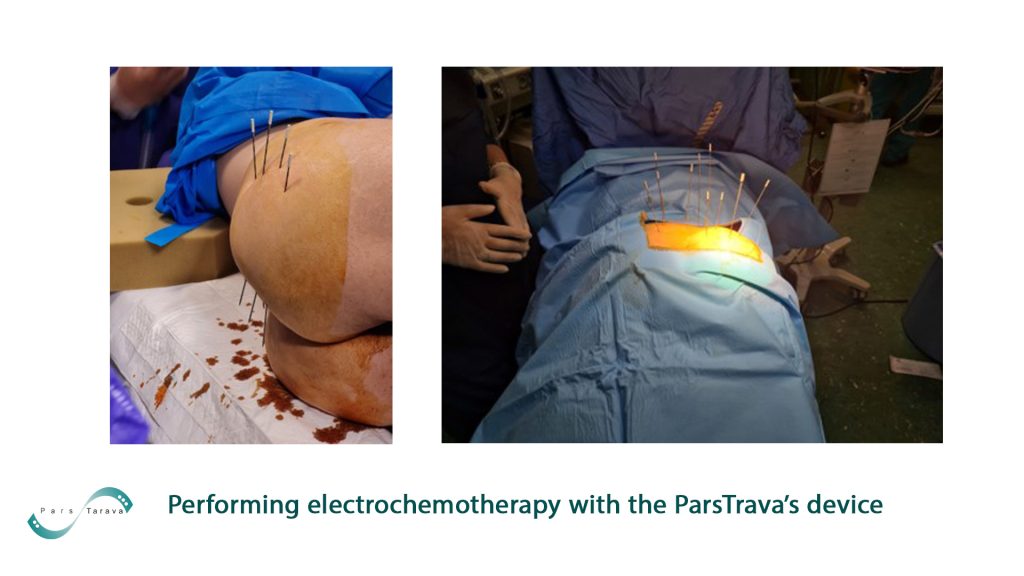
.
Treatment results with ECT in this patient in summary:
Significant tumor volume reduction after the first session (about 60%), restoration of mobility, and ability to sit without assistance. After the second session, pain control continued, and quality of life improved. No serious complications such as infection or systemic drug-related symptoms were observed.
.
Review of Related Scientific Evidence
Numerous clinical studies have confirmed the positive effects of electrochemotherapy in controlling bone tumors and reducing pain. For example, a systematic study in 2023 involving approximately 250 patients with bone metastases showed that after ECT, more than half of the patients achieved local disease control (stable tumor size), and the average pain score (VAS) decreased from about 6.9 to 2.7. In the same study, it was emphasized that electrochemotherapy is “a minimally invasive and tissue-preserving treatment” and can provide tumor control and improved quality of life for patients who have no other treatment options.
.
Other studies have shown that electrochemotherapy, with low toxicity and a short recovery period, can play a complementary role alongside conventional treatments. A European multicenter study on 102 patients with bone metastases reported that after ECT, pain reduction and significant improvement in quality of life occurred. In fact, although more randomized studies are needed, the initial results are auspicious, and ECT is considered a treatment option for non-surgical tumors at advanced centers.
.
Key Points and Recommendations
- Appropriate patient selection: ECT is ideal for small to medium-sized deep tumors that are not operable or for which previous treatments have failed. For very extensive tumors, it may need to be combined with bone stabilization or complementary therapy.
- Treatment repetition: If necessary, multiple sessions can be repeated. This report shows that although the second session had less impact, the patient’s symptoms improved. In clinical studies, repeating electrodes at multiple stages improves tumor control.
- Side effects: Compared to conventional treatments, electrochemotherapy has very few complications. The most common temporary issues include pain at the injection site, minor muscle spasms, and mild soft tissue inflammation, which resolve with usual care.
- Regular follow-up: Due to the possibility of regrowth, periodic imaging follow-up is necessary so that if needed, subsequent treatments (such as repeating ECT or radiotherapy) can be performed.
.
Conclusion
Electrochemotherapy is a minimally invasive and effective treatment method for bone tumors (especially tumors without surgical options). The present case experience shows that ECT can quickly reduce tumor volume and improve the patient’s motor function, while having few complications. Scientific studies also confirm the significant impact of this method in reducing pain and enhancing tumor control in more than half of patients. Given the availability of ECT devices in Iran (produced by Pars Tarava Company) and successful results worldwide, this method is proposed as an alternative or complement to conventional treatments in bone tumors.
.
Pars Bioelectromagnetism Company (Pars Tarava), the first manufacturer of electroporation and electrochemotherapy devices in Iran, with years of experience in electrical therapeutic technologies, is ready to provide services and equip treatment centers with this advanced technology. If you or your patients are seeking novel cancer treatments, the technical and medical teams at Pars Tarava are by your side. For consultation or more information, visit the company’s official website at persiantarava.me or contact us by phone at 00989024051862. Our experts will answer your questions and accompany you in preparing an electrochemotherapy treatment plan. With confidence in Iranian expertise in novel treatments, take a step toward health!
.
Sources
- Bocchi, M. B., Meschini, C., Pietramala, S., et al. Electrochemotherapy in the Treatment of Bone Metastases: A Systematic Review. J. Clin. Med. 2023, 12(19), 6150.
- Campanacci, L., Cevolani, L., De Terlizzi, F., et al. Operating procedures for electrochemotherapy in bone metastases: Results from a multicenter prospective study on 102 patients. Eur. J. Surg. Oncol. 2021, 47(10), 2609–2617.
- Ottlakan, A., Lazar, G., Olah, J., et al. Current Updates in Bleomycin-Based Electrochemotherapy for Deep-Seated Soft-Tissue Tumors. Biomedicines 2023, 11(2), 19.
- Bianchi, G., Campanacci, L., De Terlizzi, F., et al. Electrochemotherapy in the Treatment of Bone Metastases: A Phase II Trial. World J. Surg. 2016, 40(12), 3088–3094.
- Mali, B., Jarm, T., Snoj, M., et al. Antitumor effectiveness of electrochemotherapy: A systematic review and meta-analysis. Eur. J. Surg. Oncol. 2013, 39(1), 4–16.
- Probst, U., Fuhrmann, I., Beyer, L., et al. Electrochemotherapy as a New Modality in Interventional Oncology: A Review. Technol. Cancer Res. Treat. 2018, 17, 1533033818785329.
.